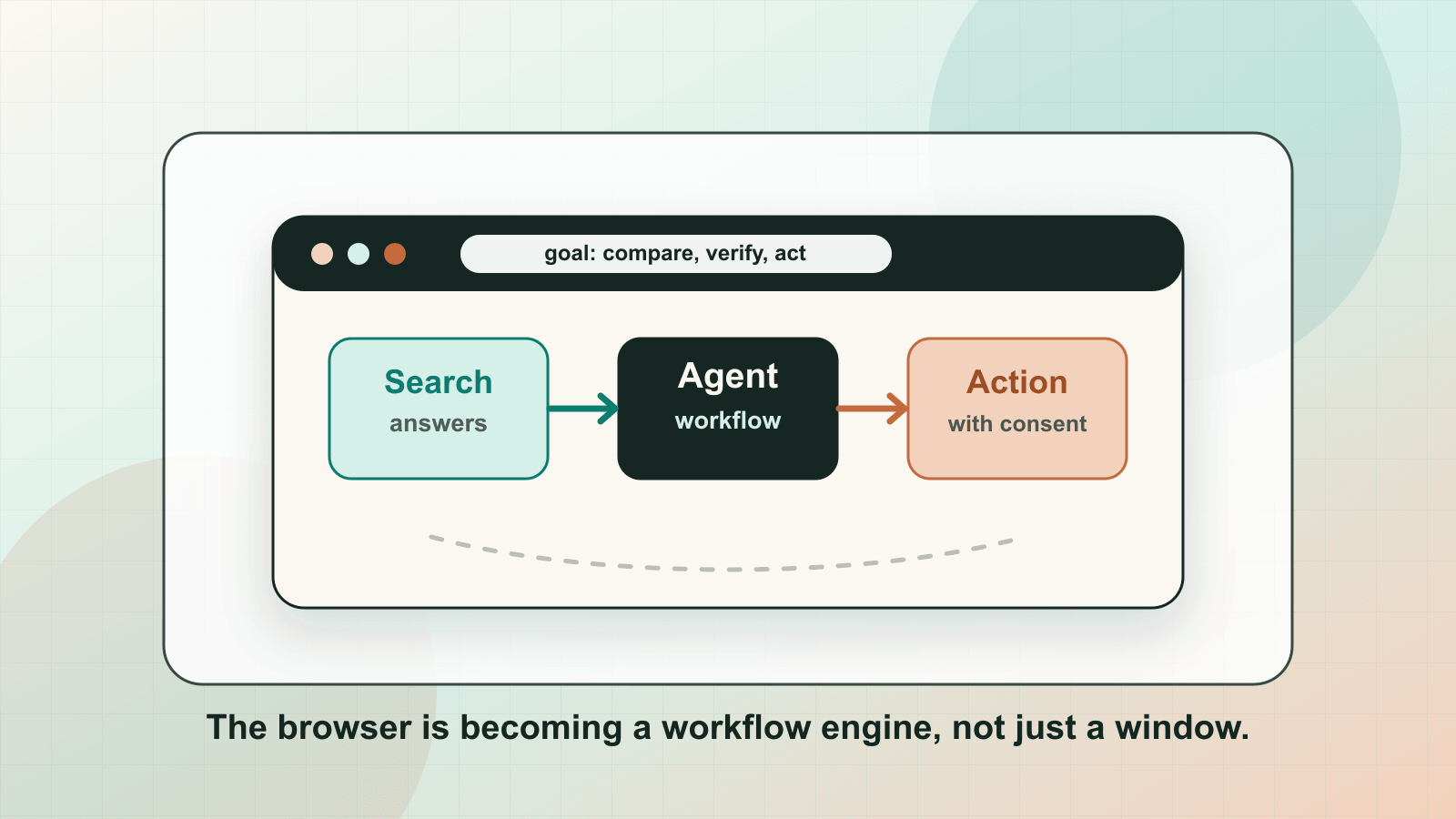
The agentic web is no longer a speculative phrase reserved for conference slides. It is becoming the practical direction of browsers, search products, publisher tools, and commerce flows. The old browser helped people move from page to page. The new browser is starting to behave more like a workflow engine: it reads context, compares options, calls tools, asks for permission, and completes pieces of a task while the user supervises.
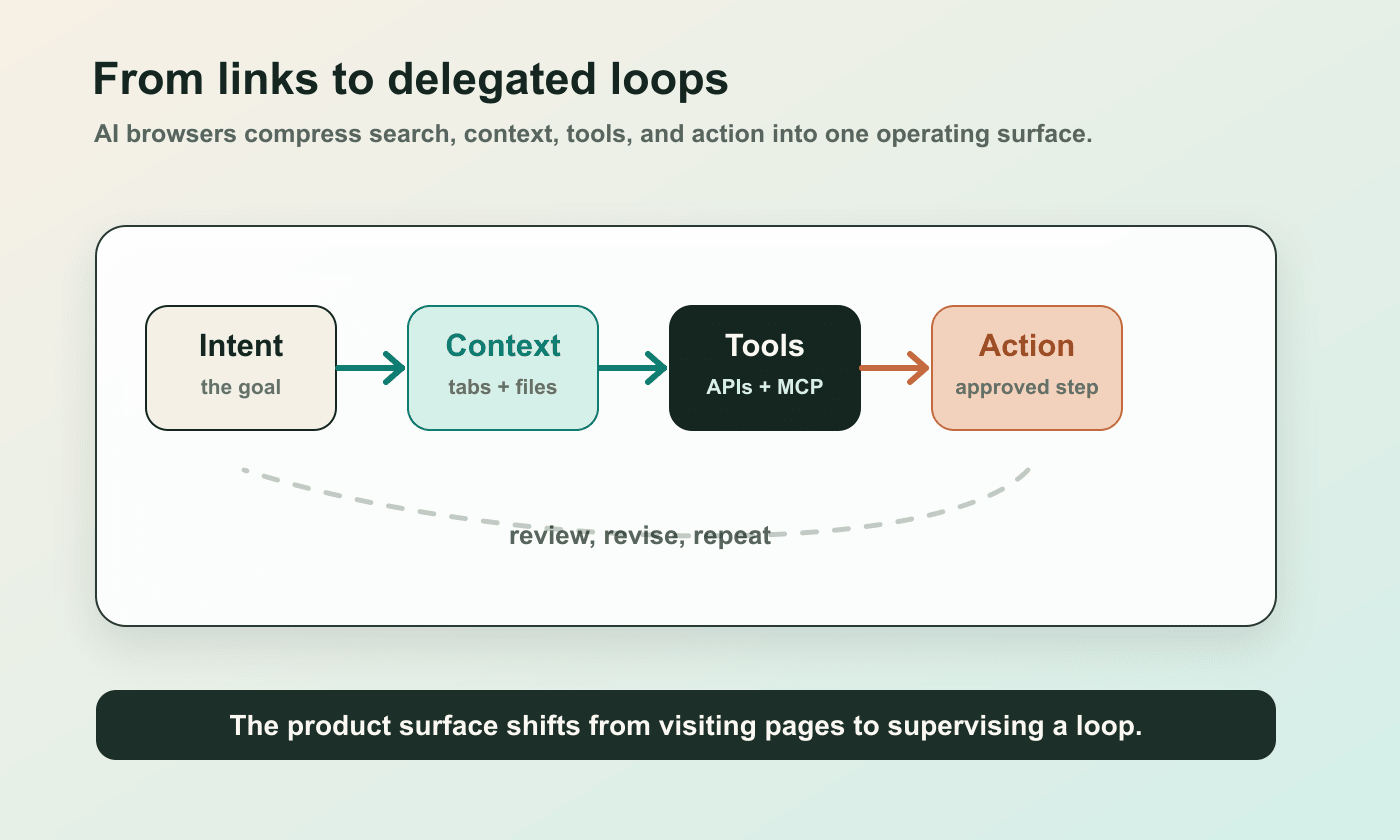
That is why AI browsers are one of the clearest tech trends of 2026. The story is not only that Chrome, Edge, Comet, Atlas, Dia, and other products are adding chat panels. The bigger shift is that browsing is moving from clicking links to delegating loops. For the earlier version of this argument, read our analysis of what Big Tech's AI browser push means for search, apps, and publishers. The next phase is more operational.
Why the Agentic Web Matters Now
It Turns Search Into Supervision
Classic search asks the user to inspect results, open tabs, compare claims, and decide what to do next. Agentic browsing changes the interface contract. The user gives a goal, and the system gathers context, checks sources, and proposes the next action. In simple language, the browser stops being only a window and becomes a coordinator.
That does not mean people disappear from the process. For serious tasks, the best pattern is supervised autonomy: the agent prepares the work, while the user reviews the evidence and approves the final step.
It Makes Distribution Less Visible
The harder part is what happens underneath. If a browser agent summarizes a page, extracts a price, checks a review, and makes a recommendation without sending a normal visit, then search traffic becomes less predictable. This connects directly to the broader cycle we covered in April's AI news analysis on capital, distribution, and trust. Distribution is moving into default software layers, and browsers may become one of the most important layers of all.
What Makes an AI Browser Different
Context Is the Product Surface
A normal chatbot can answer a question. A browser agent can work across the open tabs, the page you are reading, saved preferences, connected apps, and sometimes files or inbox context. That makes context the real product surface. The value comes from the system understanding where you are, what you are trying to finish, and which information is allowed to matter.
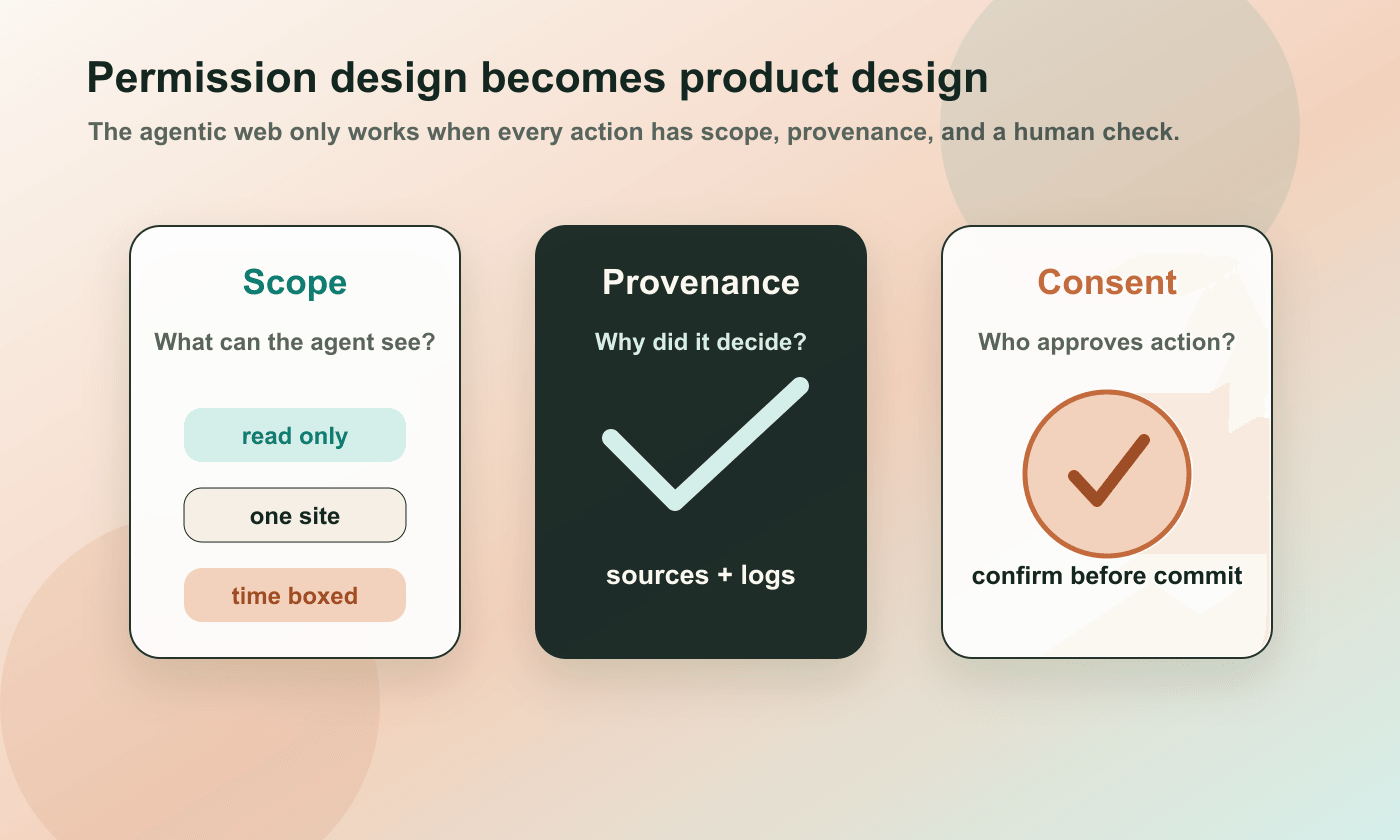
This is why privacy and memory settings are no longer small preferences. If the browser becomes a work coordinator, access control becomes core UX. Users need to know whether the agent can read one tab, all tabs, a workspace, or a connected account.
Tool Access Beats Page Scraping
The most useful browser agents will not rely only on reading messy HTML like a person with infinite patience. They will need structured tool access through APIs, Model Context Protocol-style connectors, and retrieval-augmented generation systems that can cite the material behind an answer. This is one reason the 2026 tool stack is being reshaped by open-weight models and more flexible deployment patterns. Models matter, but the surrounding tool layer decides whether agents can do reliable work.
The Business Model Is Catching Up
Publishers Need Attribution, Not Wishful Thinking
The agentic web creates a direct economic problem for publishers. If AI systems use high-quality reporting, reviews, tutorials, or databases to answer questions, the value of that content has to be visible somewhere. Microsoft's Publisher Content Marketplace is one early attempt to frame licensed access, reporting, and compensation as infrastructure for the AI web rather than a side deal between a few large companies.
The important idea is not whether one marketplace wins. It is that attribution, licensing, freshness, and provenance are becoming platform features. Publishers with trusted archives, clean metadata, original testing, and clear editorial identity have more to offer agents and humans alike.
Software May Start Treating Agents Like Users
Software companies face a similar shift. If agents operate SaaS tools on behalf of users, pricing and permission models get harder. Is an agent a seat, a bot, a delegated session, or a limited API client? The answer will shape product economics.
The Safety Problem Is Practical
Prompt Injection Becomes Web Hygiene
Browser agents create a security problem that is easy to understand: they read pages that may contain hostile instructions. A malicious page can try to tell the agent to ignore the user, leak private data, or perform an action the user never requested. This is prompt injection, and it makes trust boundaries part of browsing.
That means agentic browsers need boring but important controls: sandboxed actions, visible audit trails, source citations, domain boundaries, confirmation prompts, and good defaults. The winning products will not be the ones that act most aggressively. They will be the ones that make users comfortable delegating more because the guardrails are understandable.
Permissions Need Plain Language
The web already trained users to click through permission prompts without thinking. Agentic browsing cannot afford that pattern. Read-only should be different from can edit. One task should be different from always allowed. A purchase draft should be different from a purchase submission.
What Builders and Publishers Should Do
Write for Humans and Agents
For publishers, the answer is not to write robotic pages for machines. It is to make useful pages easier to understand. Clear headings, original analysis, structured data, strong summaries, author signals, and fresh update dates all help. Human readers benefit first. Agents benefit because the content is easier to parse, cite, and compare.
For builders, the best response is to think in workflows, not prompts. A prompt is one instruction. A workflow defines inputs, permissions, review points, failure modes, and the final handoff. Our guide on turning one good prompt workflow into a repeatable team SOP is built around that same idea: AI gets more useful when the process around it is explicit.
Design Workflows, Not Just Assistants
The agentic browser should not be judged only by how clever its answer sounds. Judge it by whether it reduces switching, preserves evidence, explains uncertainty, and asks for approval at the right moment. That is the difference between a novelty assistant and a serious workflow layer.
Conclusion
The agentic web matters because it changes the shape of internet use. Search becomes supervision. Browsers become workflow engines. Publishers become data and trust suppliers. Security moves from a specialist concern into everyday interface design.
The simple read is this: AI browsers are not the destination. They are the first visible surface of a larger platform shift. The web is being rebuilt around agents that can understand goals and operate tools. The companies that win will not just make the smartest sidebar. They will make delegation feel useful, accountable, and safe enough to become normal.
Written by
Maya Ellison
Founding Editor
Maya covers AI news cycles, platform shifts, and the ways emerging technology reshapes digital work and publishing.
Tech trends
Follow platform shifts before they become defaults.
Read more Syntax Dispatch coverage on AI browsers, search, publishing, workflow tools, and the software layers reshaping digital work.
Read related analysisFAQ
What is the agentic web?
The agentic web is a version of the internet where AI agents can use context, tools, and permissions to complete parts of a task for users instead of only showing pages or answers.
How are AI browsers different from normal browsers?
Normal browsers help users visit pages. AI browsers can summarize pages, compare information, call tools, and prepare actions while the user supervises and approves important steps.
Why does the agentic web matter for publishers?
If agents answer questions without sending normal traffic, publishers need stronger attribution, licensing, metadata, and original analysis so their work remains visible and valuable.