
Gemini 3 Pro review is no longer a simple story of Google released a smarter AI model. As of April 2026, Google has already pushed Gemini 3.1 Pro into preview, which means Gemini 3 Pro now sits in a slightly strange position: it is still a very capable flagship-class model, but it is no longer the newest face on the stage.
The short version: Gemini 3 Pro is strong at complex understanding, multimodal analysis, and workflows that already live inside Google's ecosystem. Its strengths are obvious, and its weaknesses are not mysterious. It feels like a fast research assistant with a large desk full of useful material, though it can occasionally miss the exact shape of what you meant.
If you are comparing frontier models more broadly, read our GPT-5.5 vs Claude Opus 4.7 comparison and our GPT-5.5 overview as companion pieces. Together, they make the 2026 AI model landscape much easier to understand.
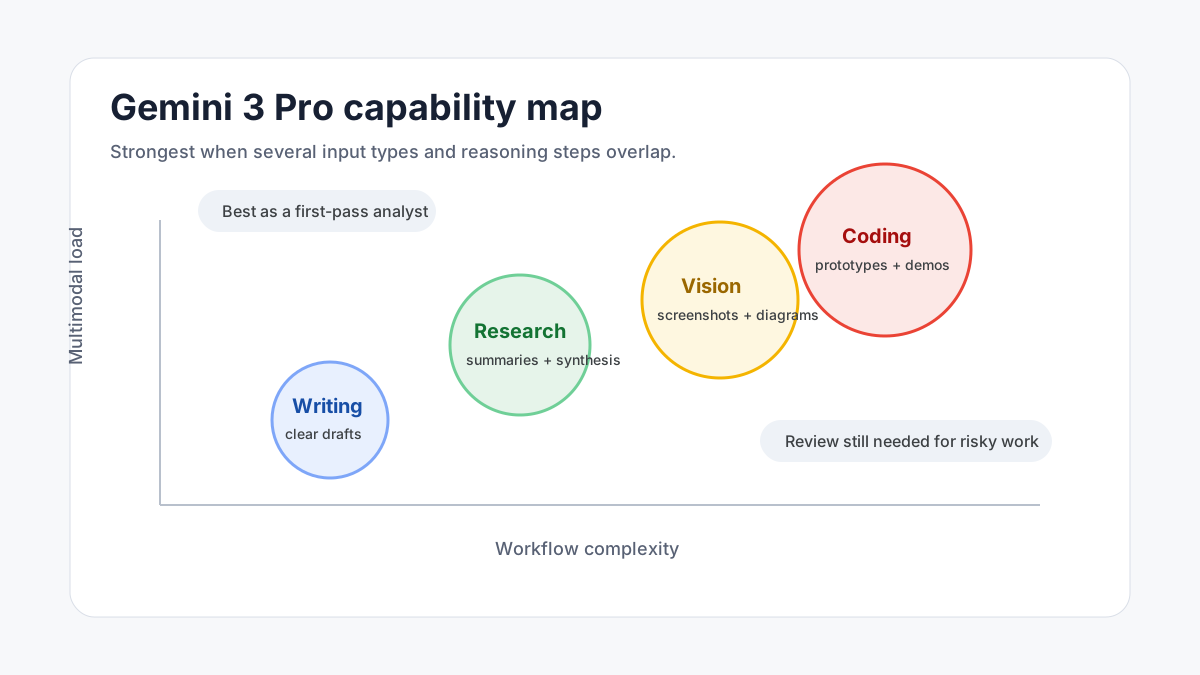
Overall Verdict: Its Strength Is Complex Understanding
Reasoning: More Than Answer Recycling
The best thing about Gemini 3 Pro is that it does not usually feel like a search-results machine wearing a fancy jacket. Google emphasized stronger reasoning, context understanding, and multimodal performance when Gemini 3 Pro launched, and that shows up in everyday use. When a task includes several constraints, multiple documents, or a chain of logic, Gemini 3 Pro is usually good at breaking the problem into pieces before giving an answer.
For example, if you give it a product brief, a few screenshots, and some user feedback, it will not simply say users are unhappy. It can separate the problem into information architecture, interaction flow, visual hierarchy, and conversion friction. That makes it useful for research, product work, content planning, and learning.
But it is not a flawless reasoning engine. When the prompt is vague, Gemini 3 Pro sometimes gives a polished answer instead of stopping to ask for clarification. For casual users, that feels smooth. For serious work, it means you need to define the boundaries clearly.
Multimodal Experience: Google's Home-Field Advantage
Images, Web Pages, and Documents Feel Natural
Gemini 3 Pro's multimodal ability is where it feels most like a Google product. When images, text, web pages, tables, and code are mixed together, it handles them naturally instead of flattening everything into a generic summary. It can read an image, explain relationships inside that image, inspect a screenshot, and point out interface problems.
That is especially helpful for creators and marketers. You can give it a page screenshot and ask whether the headline is clear, whether the button stands out, and whether the visual hierarchy is messy. The feedback is not always design-director level, but it is often good enough for a first diagnostic pass.
Search, NotebookLM, and AI Studio Are Real Advantages
Another advantage of Gemini 3 Pro is not just the model itself, but the tools around it. Once it appears in the Gemini app, AI Studio, Vertex AI, NotebookLM, and Google Antigravity, its value is not limited to chat. It can fit into research, development, and knowledge-management workflows.
This matters because the AI race is no longer only about who writes the prettiest single response. It is about which model interrupts your workflow the least. Google's infrastructure across search, documents, cloud services, and developer tools gives Gemini 3 Pro a practical advantage.
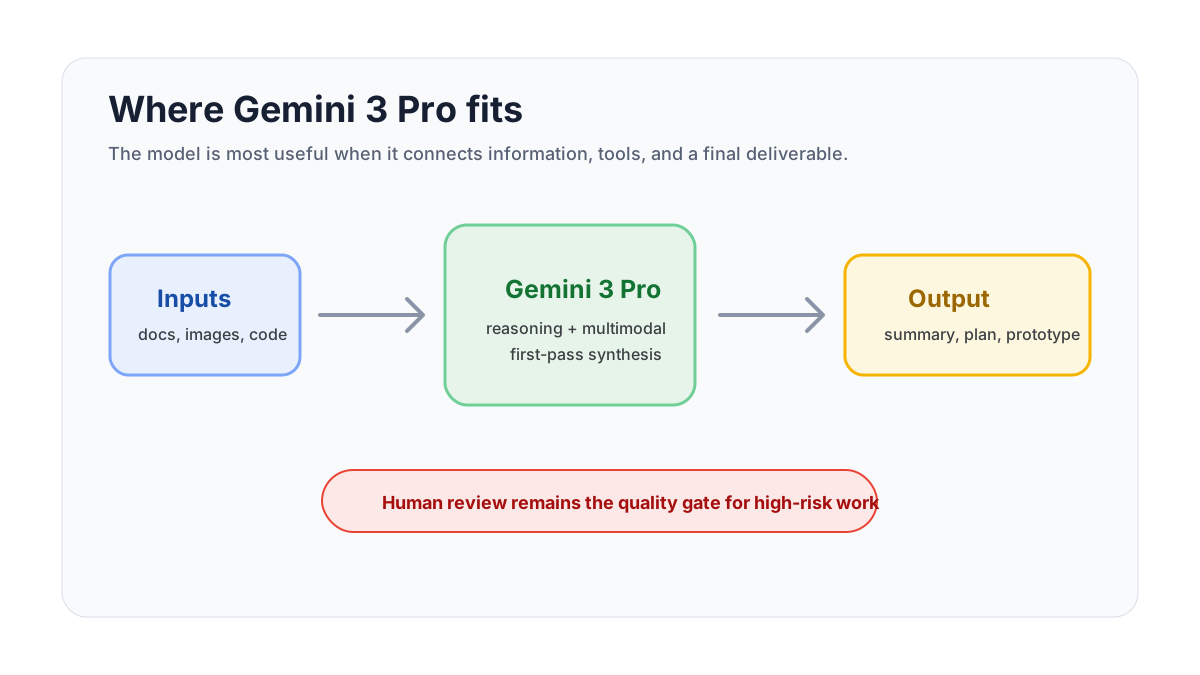
Coding and Writing: Capable, But Still Needs Review
Coding: Good for Prototypes and Explanations
Gemini 3 Pro is a capable coding assistant, especially for prototypes, explaining unfamiliar code, turning API documentation into working examples, or converting a vague idea into a page structure. Google's later messaging around Gemini 3.1 Pro continued to emphasize code animation, complex system synthesis, and interactive design, which shows the direction of the Gemini 3 family clearly: not just writing functions, but making ideas visible.
Still, if the task involves critical changes inside a large codebase, human review remains necessary. Gemini 3 Pro can produce very convincing implementation plans, but looks reasonable and does not break edge cases are different standards. Tests, type checks, and code review still matter.
Writing: Best for Informational Content
As a writing assistant, Gemini 3 Pro tends to be clear and direct. It is good for tutorials, reviews, product explainers, research summaries, and FAQs. The downside is that its voice can sometimes drift toward official launch blog, so you may need to add rhythm, opinion, and texture yourself.
If you want a more opinionated article, give it specific style instructions: less press-release language, more hands-on judgment, professional terms explained in plain English. Otherwise, it can produce paragraphs that are accurate but not especially memorable.
Weaknesses: The Problem Is Not Stupidity, But Inconsistency
Experience Can Depend on Version and Access Point
One practical issue with Gemini 3 Pro is that the experience can vary depending on where you use it. The Gemini app, AI Studio, Vertex AI, and NotebookLM may differ in model behavior, limits, and response style because of product decisions and quota rules. Sometimes the question is not whether Gemini 3 Pro is good, but whether you are getting the best version of Gemini 3 Pro in this interface.
That makes reviews harder. A developer may find it excellent in AI Studio, while a consumer user may feel the app version is slower or less sharp. Both impressions can be valid.
Gemini 3.1 Pro Changes the Comparison
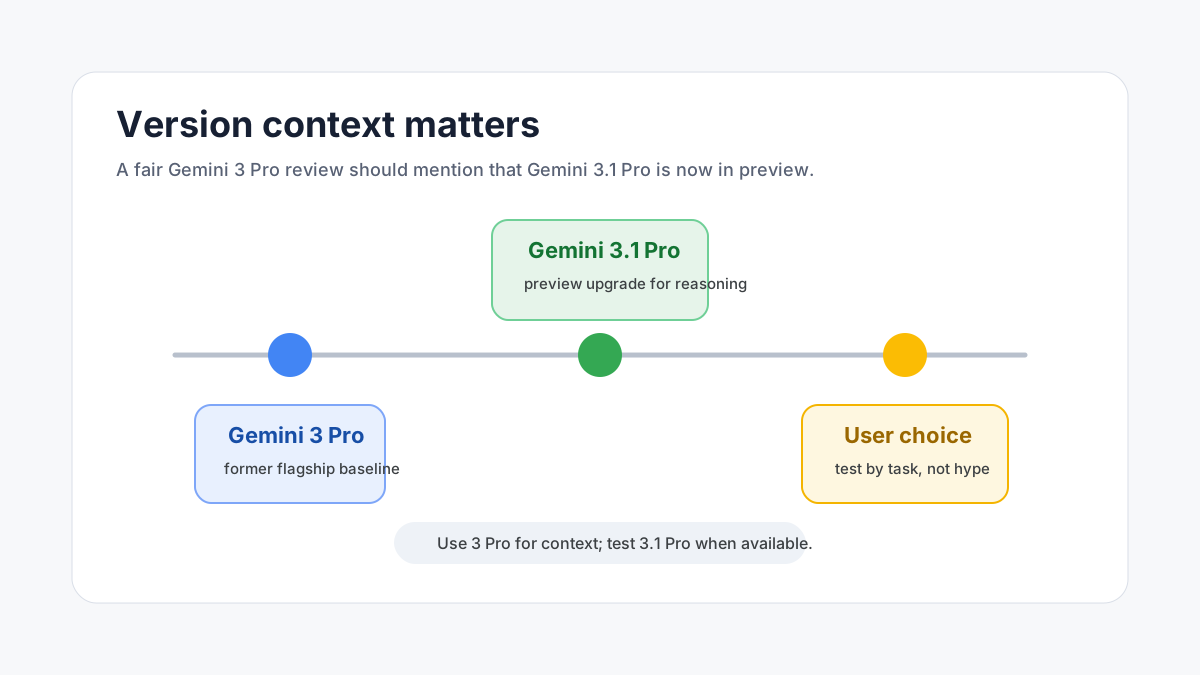
The bigger complication is that Gemini 3 Pro has already been followed by Gemini 3.1 Pro. Google says 3.1 Pro makes a major jump on complex reasoning benchmarks such as ARC-AGI-2 and positions it as a stronger baseline for difficult tasks. In other words, if you ask whether Gemini 3 Pro is still worth using, the answer is yes. But if you can access Gemini 3.1 Pro, test that first.
Who Should Use Gemini 3 Pro?
Best Fit
Gemini 3 Pro is a good fit for three groups. The first is anyone who handles large amounts of information: researchers, students, analysts, and people writing reports. The second is content creators, especially those who need to judge images, pages, tables, and text together. The third is developers who need help with prototypes, documentation, demos, and API exploration.
If your work already lives inside the Google ecosystem, its value increases. The model is only the entry point. The real time savings come from switching less between search, documents, notes, cloud tools, and development environments.
Not the Best Fit
If you need extremely strict code review, highly cautious fact-checking, or professional conclusions where every step must be traceable, Gemini 3 Pro should not be your only tool. It is useful as a first-pass analyst, not as the final judge.
Conclusion: Gemini 3 Pro Is a Strong Model, Not an Oracle
Gemini 3 Pro's core value is turning complex input into understandable, usable output. Its multimodal ability, Google ecosystem integration, and complex-task handling are strong enough to earn a place in any serious AI toolkit.
But neutrally speaking, it is not an automatic winner. Its quality can depend on access point, quota, version, and task type. For high-risk work, human verification is still required. Looking at Gemini 3 Pro in 2026, its best role is not the newest king, but a key turning point in the Gemini 3 series. It showed that Gemini could become a serious work model, while Gemini 3.1 Pro is now pushing that path further.
Sources: Google Gemini 3.1 Pro announcement and MacRumors Gemini 3 launch report.
Written by
Maya Ellison
Founding Editor
Maya covers AI news cycles, platform shifts, and the ways emerging technology reshapes digital work and publishing.
AI model watch
Track AI model launches with context, not recycled hype.
Read more Syntax Dispatch coverage on AI models, practical tooling shifts, and real workflow changes.
Browse AI coverageFAQ
Is Gemini 3 Pro still worth using in 2026?
Yes, especially for multimodal analysis, research, prototyping, and Google ecosystem workflows. But if Gemini 3.1 Pro is available, it should be tested first for complex reasoning tasks.
What is Gemini 3 Pro best at?
Gemini 3 Pro is strongest when tasks combine text, images, documents, code, and several reasoning steps. It works well as a first-pass analyst for complex information.
What are Gemini 3 Pro's main weaknesses?
The main weaknesses are inconsistent experience across access points, occasional overconfident answers to vague prompts, and the need for human review on high-risk work.


